Help. Everything looks the same.
Why we are all annoyed by the designs that feel “too AI” and the existential question of creative…
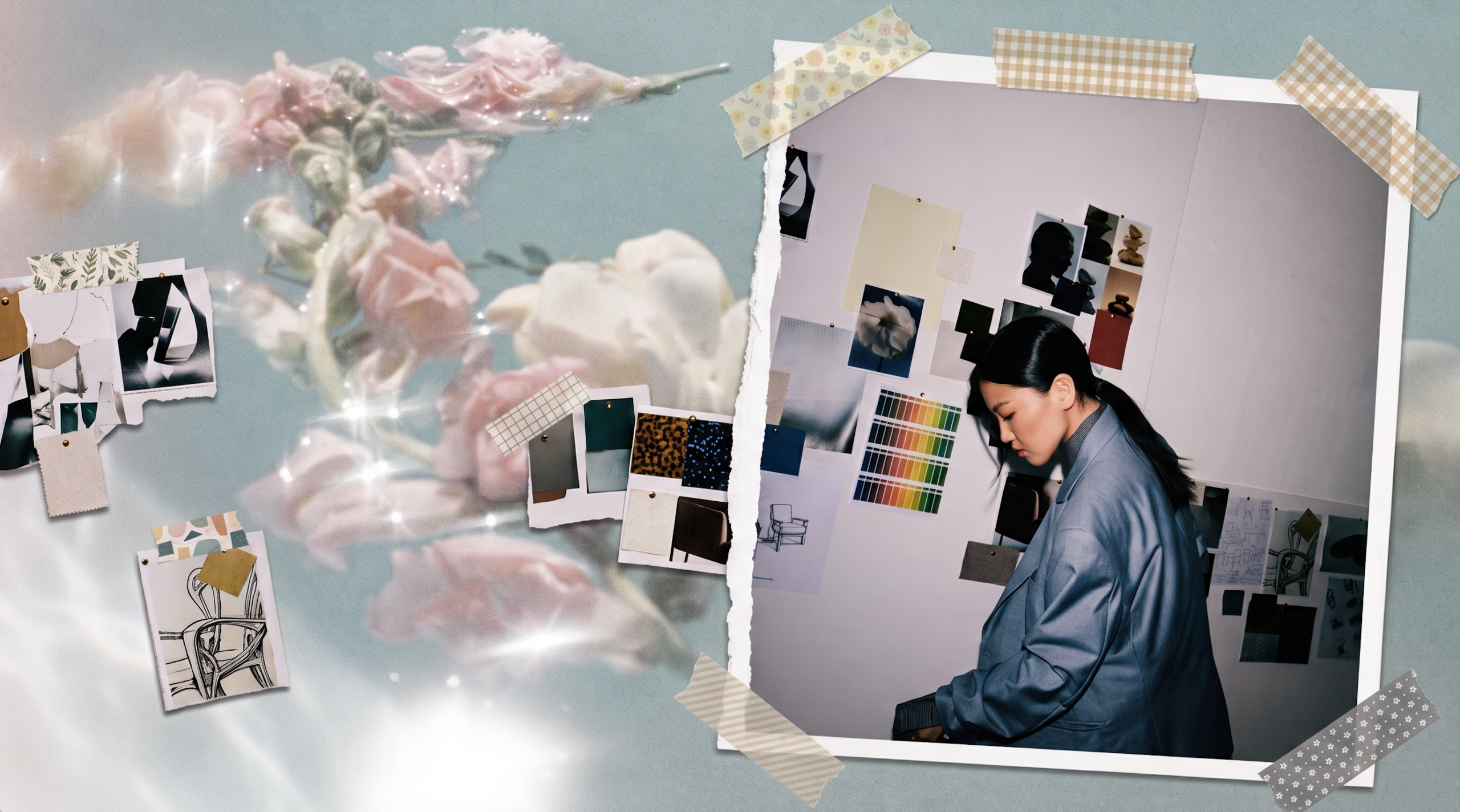
Why we are all annoyed by the designs that feel “too AI” and the existential question of creative studios like ours.
Last week, a founder came to us for help with branding for their new startup. They had attempted to create their new brand utilizing AI tools but they were frustrated – it wasn’t hitting the mark. “It just all looks the same as every other AI-designed brand … the colors, fonts, the way it organizes the deck…” Around the same time, a different client had mentioned that he wanted to revisit our project proposal because his AI-enthusiast partner was encouraging him to tackle the branding in-house with the AI tools available at his fingertips.
These are the commonplace conversations we are now having with clients week after week. And frankly, it’s a very interesting time to be running a design company that is essentially facing an existential question: if AI has democratized access to design and technology, where does that leave creative tech studios like ours?
But first, let’s look into the question of … “How can I use AI but not make the design look so, well, AI?” Despite different inputs, prompts and the people writing them, why does it all look the same?
Why does AI design all look the same?
AI designs have the same vibe and look because they essentially have their own set of brand guidelines. AI is an excellent averaging engine. It does not invent anything original, but takes what’s already on the internet (our input) and averages it into the safest, most probable design for the user. Then our AI-generated designs go back out into the internet, feeding the algorithm again and again, narrowing and converging toward the mean (according to a 2026 arXiv study).
When I asked Claude what its brand guidelines would be, this is what it wrote:
Brand essence: Helpful, polished, inoffensive. Pleasing to as many people as possible and surprising to none.
Typography
- Primary: Inter, or any clean sans-serif. Also acceptable: Geist, DM Sans, Poppins.
- For a “premium” feel: a soft editorial serif in the headlines, such as Fraunces, Instrument Serif or Playfair.
- Headlines are big, bold, short and centered.
Rule zero: When in doubt, do what most people have already done.
The rules make sense. They’re designed for the masses, not for specific cases. And it’s honestly great. It gives a safe, commonly accepted, easy-to-read look for many situations. And it is a goldmine for folks who are multifaceted and who need to get things done. Think of a busy entrepreneur testing ideas quickly, a local deli updating its seasonal menu on a budget, or my husband and his friends planning a golf trip who want one place for stats, lodging info and satirical player profiles they can edit together. It’s useful, it’s accessible, and it’s fun.
Yet when you’re building a brand to take to market, designing with AI tools can feel limiting or, as many have found, like an endless decision-making process. Decision fatigue kicks in.
Here’s the thing about branding. Branding is an expression: of the product, the founder, the community, the organization. By the nature of how they’re trained, LLMs aren’t incentivized to think outside the box. Their goal is to get you the answer in the speediest and safest way possible. And we can’t fault the tool for that, but we do need to recognize what it’s best designed to do and understand the value of expertise versus ability.
Why the defaults are hard to escape
A lot of AI design is built on the same code toolkits (e.g., Tailwind), and those come with a built-in color palette, corner radius and spacing scale. So some of the sameness isn’t the AI “averaging.” It’s thousands of outputs inheriting one starter kit.
Still, the tool is powerful and flexible, so you can shape it to your liking, but you’ll have to do much of the heavy lifting if you want to stand out. You have to be willing to spend the time building your brand and understanding AI’s natural tendencies. An indolent prompt gets you the default. And that brings us back to the age-old question: do you hire someone, or spend the time to do it yourself?
It’s just gotten a lot easier in 2026 to explore and to bring your creative vision to life directly with the tools instead of going to a professional. And it’s amazing. There’s no longer an excuse to let bureaucracy or tedious work slow you down. Yet, in order to get to the brand experience that you are probably looking for, you have to be willing to wrestle with your tools. And you have to bring your perspective, and exactly what you want, into your prompts in concrete terms.
So where can you find inspiration to better guide your AI tool to get you closer to where you want to be? Go outside. Find a billboard that you love and take pictures of it. Find textures that inspire you and take notes on them. Curate your real-life Pinterest board. Ingest the inspiration that excites you and do your best to communicate and prompt your AI to get to that essence.
Don’t rely on your AI to do the inspiration gathering and the deep questioning. That’s the work you will have to do, or get a professional to help you with.
Where AI fits, and what only people can do (for now)
Here’s the truth: we love using AI at our studio. We are not purists by any means. We believe creativity and technology merge and will always evolve together. We have to learn to adapt and use it to our advantage. AI has allowed us to get our ideas on paper faster than in the (now) nostalgic days when we gathered around a whiteboard, collected markers to draw mind maps, and wrote product specs word by word. But the hours we spent doing that work by hand are what let us use AI tools more efficiently.
We can all have the same tools, but it’s who is behind the keyboard that determines the sophistication of the output. This goes for any tool: a hammer, a camera, Figma, Photoshop, a forklift. Sure, anyone can pick one up and make do. But a professional who has built the skills and spent countless hours practicing will have a drastically different experience with them.
People gathered at the recent Pro-Human Assembly in Washington, DC, to discuss not so much the imminent shortage of jobs and lagging policies around AI, but the philosophy of life and what it means to be human in our AI world. Owen Yingling, a senior at the University of Chicago, said in this article: “I see people’s parents, my parents . . . they love all the things they can do with A.I., because these are people who are fifty, sixty years old, who have already lived lives, have already become the person that they are,” he said. “But for us, because we haven’t done anything or become anyone, it’s a sort of existential threat.”
The reality is that while the tool can do the work, the intricacies of the designs are shaped by humans: people who read the context between words and body language, who connect the dots between what they’ve observed, and who draw on experiences that lead them to their own hypotheses.
The same goes for brand design. It’s the questions asked, the thing the client wants to say but hesitates to, a feeling we want to evoke but can’t quite put into words – these are the nuances and the very details that help bring us to a brand experience we’re proud of, that we feel seen in, and that has a real story to tell. The debating, the back and forth, the trust built until we’re simpatico with a client: that’s what AI tools can’t yet do.
In the middle of a loneliness epidemic, creating alone with AI may only deepen it.
So what is the point of a design studio now?
AI has raised the floor. We now all expect a higher level of polish in design and writing. But polish on its own can be meretricious: attractive at a glance, empty underneath. So the truth is, we become obsolete as a company, or as creative producers, if we compete only on speed or deliverables. So the differentiator has to be what we put into the tool, something the tool itself isn’t designed or incentivized to produce. It’s the experience, history, and perspective that we bring and the way we approach the work in design that make all the difference. We are now all partners with our AI tools.
So where does that leave us? It’s a sobering question for many business owners, especially in tech and creative fields. Yet, I’m reminded of the core human experience that has always been at the center of our work. The questions that unearth the true essence of the founders we are working with, the live sessions where we completely change the direction of the brand’s strategy because what was written on paper didn’t align with what are are seeing in the live session, and most profoundly, how people grow through the process of the project.
Who we become in the process
As Joshua Rothman writes in this article that AI has deprived us a bit of the time, the back and forth, the frustrations, the collaboration, the defending, the re-working, the re-writing for the 10th time, the journey to get us to the self-confidence to know what we’re talking about. To have sweated it out and been in the nitty gritty of the details that get us to the finish line.
Maybe the point isn’t just the final design. Maybe, in our pursuit of the work, it’s who we become along the way. The small decisions that we wrestled with to get to the finish line. Founders come out proud of their brand, their website, the culmination of the many steps and decisions that got them there. We had to vet our story throughout and to make it airtight. We had to sit with it and to alter it. We had to tell our story many times and believe it ourselves.
We can all feel when a brand or creative experience is authentic. And it typically has very little to do with how it looks and everything to do with how we feel in and around the brand. And that is the result of many hard decisions and a lot of work, trimmed and edited over months.
I hope that as we swing toward individual expression (and away from millennial gray interiors) and share more awkward in-person moments, we find more of ourselves in the process. To read more, to write more, to be able to distinguish and discern our own voices from merely well-written language. That we own our own thoughts, come to our own hypotheses. That we have enough practice and knowledge to challenge AI’s output. That we embrace the vulnerability of sharing something that doesn’t feel finished yet, that we come to love the ugly and the missteps that come with the territory of building anything worthwhile.
FAQ
- Why does AI-generated design all look the same? AI designs have the same vibe and look because they essentially have their own set of brand guidelines. AI is an excellent averaging engine. It does not invent anything original, but takes what’s already on the internet (our input) and averages it into the safest, most probable design for the user.
- Is hiring a design agency worth it for a small business? It depends. If you are looking to get your ideas from your head into something concrete, using AI tools can be helpful for brainstorming and mapping out your ideas. If you are looking to distinguish your brand from the rest of AI-designed brands, your best bet is to work with a professional, whether a freelancer or an agency.
- How does Oak Theory use AI in its design process? We use AI to speed up research, synthesize meeting notes, and design directly in prompts and code instead of moving from one step to the next.