
Healthcare / Design Systems & Web Design

Optum Pharmacy Website Redesign

Building one design system to unify a fragmented healthcare experience. How Oak Theory led the redesign of Optum's pharmacy website and built its design pattern library — replacing scattered, inconsistent UX with a single source of truth and a faster path from design to development.

Next case studySee more work
Client
Optum
Industry
Healthcare / Pharmacy
Year
2026
Services
Creative Direction, UX Design, Design Systems, Web Design, Web Development, Accessibility
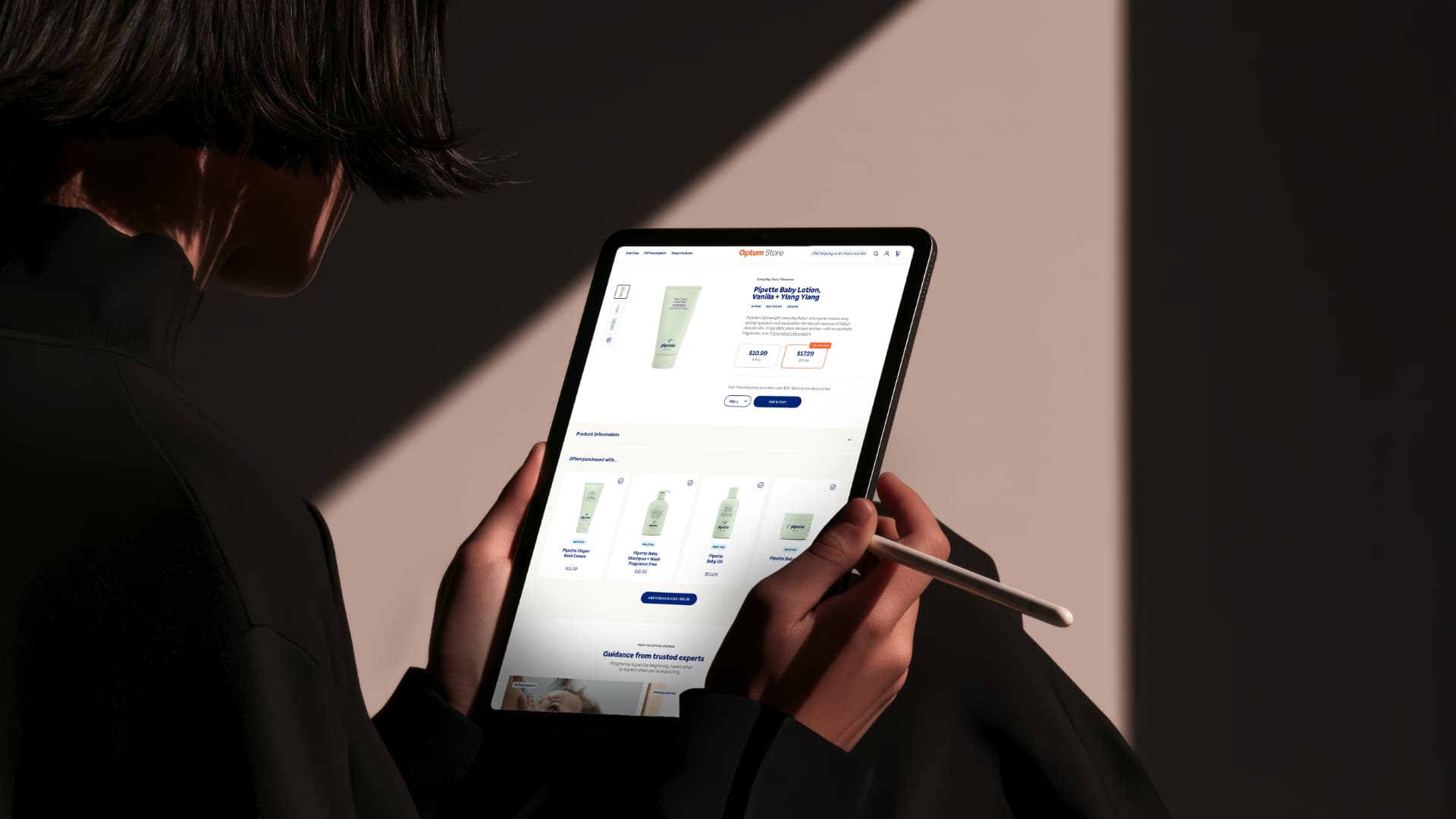
A person holding a tablet displaying the redesigned Optum Store product detail page.

Quick answer

Oak Theory is a web design, development, and branding studio that redesigned Optum's pharmacy experience and built its design pattern library — a single source of truth spanning tokens, components, and usage guidelines in Figma, structured for direct handoff into Contentful. By leading design and speaking developers' language directly, Oak Theory replaced fragmented, inconsistent UX with one unified system and dramatically faster design-to-development handoff.

Optum logo in bright orange on a dark background.

About

One pharmacy experience, built by many hands.

Optum's pharmacy site serves patients filling and managing prescriptions. Like many large healthcare platforms, it had grown through many hands — multiple designers, multiple UX contributors, and multiple design guides living in different places. Everyone was trying to speak one language, but there was no single source of truth to speak it from.

Oak Theory's founder joined as creative lead to direct and navigate that complexity, then brought the Oak Theory team in to expand the scope of what could get built. Over roughly a year, a team of four to five worked across design and development to elevate the existing pharmacy experience, unify its visual language, and build the system that would keep it consistent going forward.

The challenge

The problem wasn't talent. It was fragmentation.

With multiple design guides scattered across the organization, the same button, layout, or interaction could look and behave several different ways depending on who built it and when. At the start, the site carried roughly six different CTA button styles alone.

  • A disjointed patient experience. Rounded corners, button states, and CTAs varied page to page, making the site feel less coherent and harder to move through.
  • Slow design-to-development handoff. Without a shared system, developers had to interpret intent from static files, which slowed everything down.
  • Visual accessibility and compliance gaps. How buttons popped, how interactive elements read, and how patients could tell what was clickable all needed to be brought up to a consistent, accessible standard.

The job was to bring all of it under one roof — one language, one source of truth.

What we did

Scope of engagement

Creative direction across the pharmacy redesignConsultingConsulting
Design pattern library built from atoms up in FigmaDesign SystemsDesign Systems
PDP and checkout flow redesignWebsite DesignWebsite Design
Visual accessibility and compliance remediationUX / UI AuditUX / UI Audit

Our Approach

01

One source of truth.

The first move was consolidation. Instead of many competing design guides, Oak Theory established a single, authoritative system everyone could build from. That alone resolved most of the inconsistency at the root rather than page by page.
02

A design pattern library built for developers, not just designers.

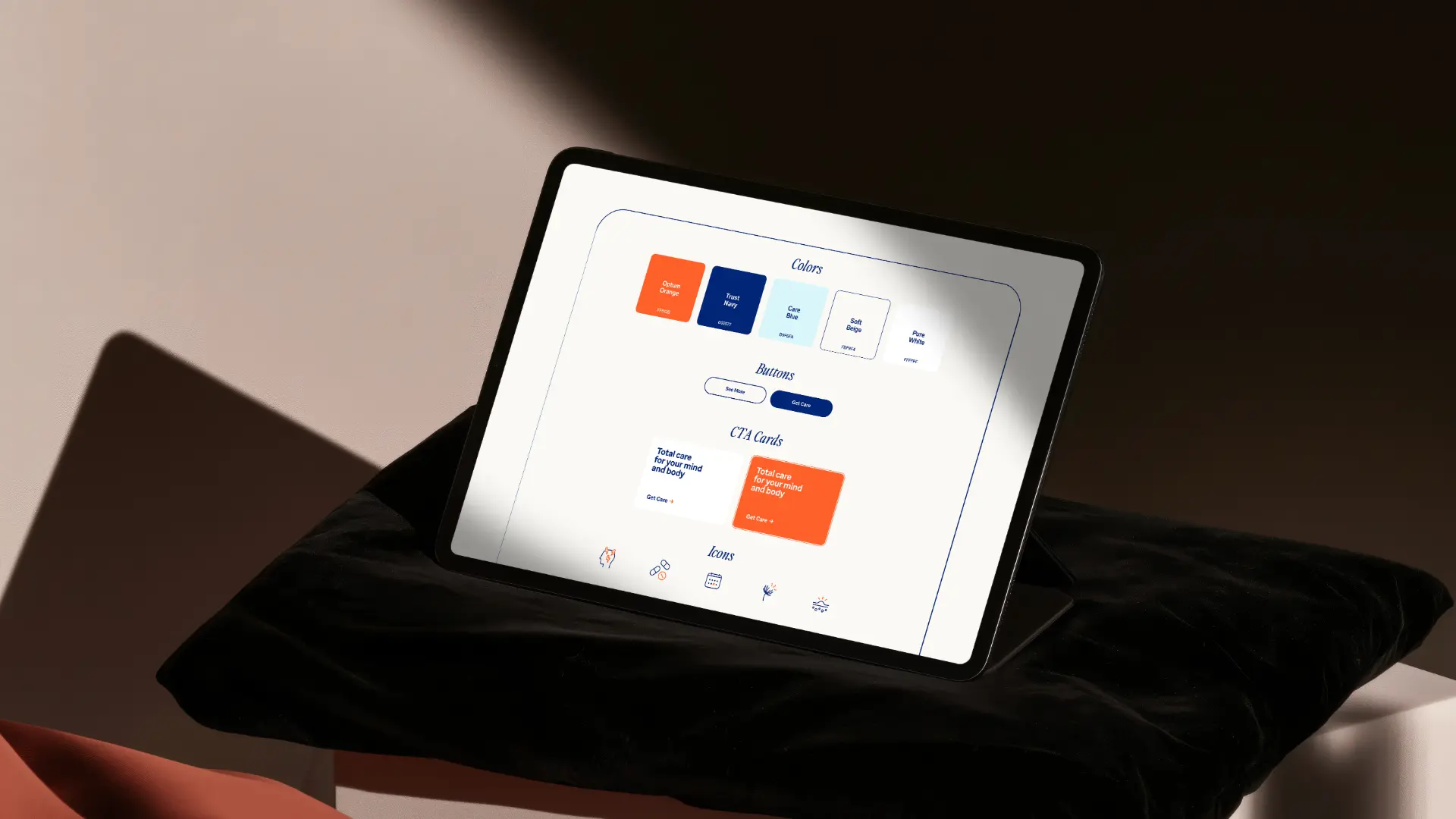
Inspired by the rigor of IBM's Carbon design system, the DPL was broken all the way down to atoms — tokens, components, and clear usage guidelines, all built out in Figma. Critically, it was structured so developers could grab exactly what they needed and assemble modules directly in Contentful.

The library wasn't a reference document that sat on a shelf. It was a working tool wired into how the site actually gets built.

Tablet showing the Optum design pattern library — color tokens, button styles, CTA cards, and icons.
03

Design and development, speaking the same language.

Because Oak Theory's lead understood development directly, design decisions could be pressure-tested with engineers in real time — what was feasible, what was fast, what would actually ship.

Working inside Contentful together closed the usual gap between "handed off" and "built," and let the team move remarkably fast.

04

A cleaner, more consistent patient experience.

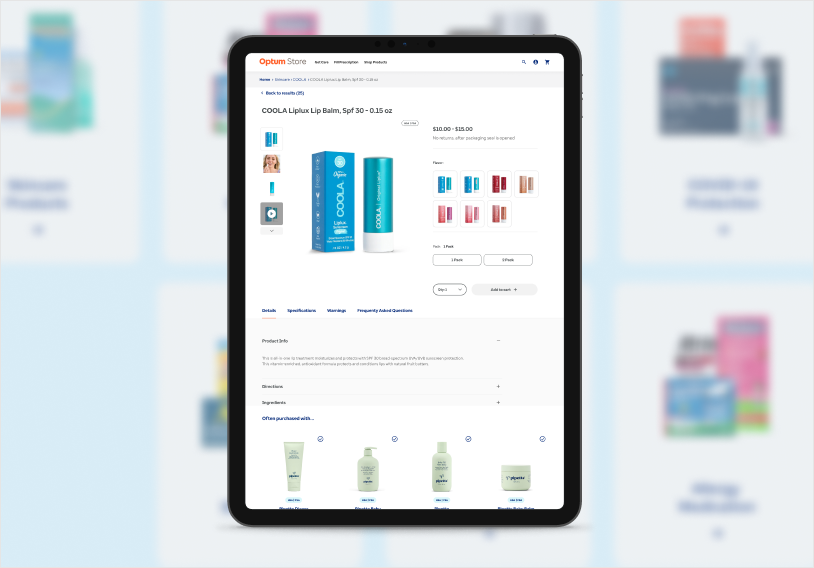
PDP and checkout were reworked around clearer information hierarchy and layout. The team refined how patients move through the flow, tested how to introduce features like coupon opt-ins, and removed elements that added friction rather than value — simplifying the path to completing a prescription.

Redesigned Optum Store product detail page shown on a tablet, with product gallery, variants, and related items.
05

A smarter way to search.

Oak Theory introduced a dynamic search menu designed for how patients actually think. Someone who can't spell a medication, or who doesn't know the drug name and simply types "cold medication," gets guided toward the right destination.

  • Relevant prescriptions surfaced from partial or plain-language queries.
  • Appointment booking offered as an alternate path forward.
  • Optum's own articles on topics like allergies and cold relief.
  • A foundation for AI-driven recommendations over time.

The result meets patients wherever they enter, and points them to a solution rather than a dead end.

Selected work

Design details

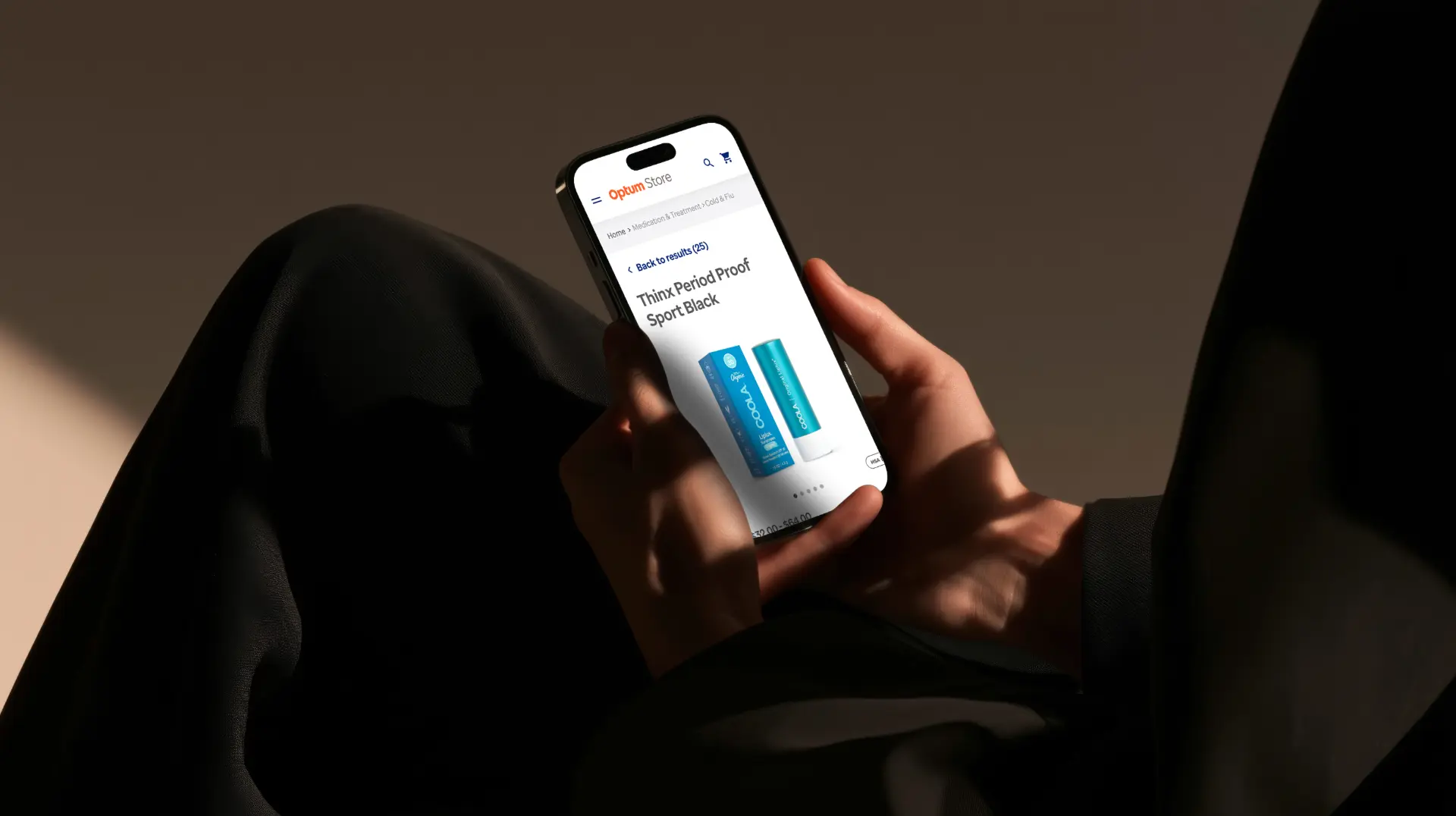
Hand holding a phone showing the Optum Store product page on mobile.
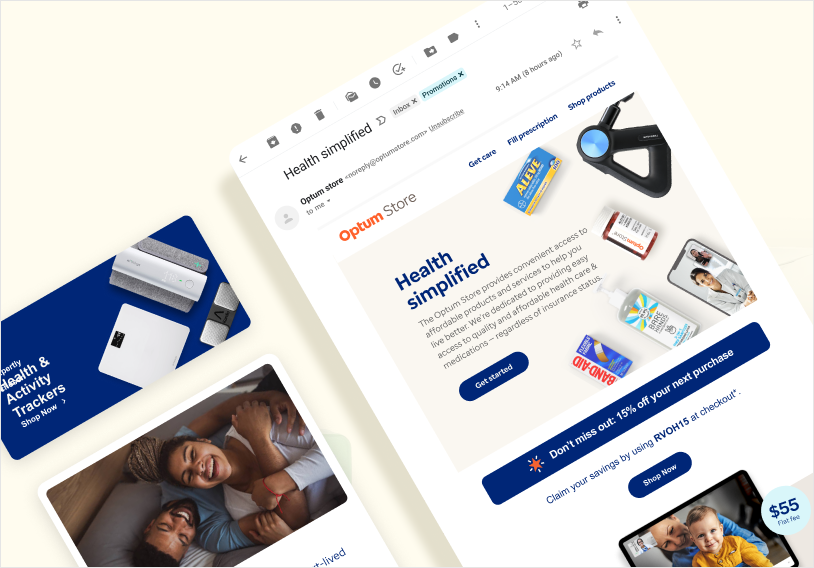
Optum Store marketing email and companion display banners using the unified design system.

The Results

One system, measurably better engagement.

Compared to the pre-redesign baseline

+0.00%

CTA styles consolidated into one

+0.00%

Single source of truth for design

MetricBeforeAfterChange
Avg. session durationBaselineLonger sessions post-launch[X% — confirm]
Checkout completionBaselineMore completed checkouts[X% — confirm]
Site engagementBaselineRecord engagement numbers[metric — confirm]
Design-to-dev handoffStatic file interpretationFigma-to-Contentful DPL workflowDramatically faster
Directional outcomes are confirmed; bracketed figures are placeholders pending final analytics.Post-launch measurement window

FAQ

Frequently asked questions

Have a fragmented product experience
that needs one source of truth?

Oak Theory builds design systems and healthcare web experiences that unify how teams design and how developers build.

Let's talk